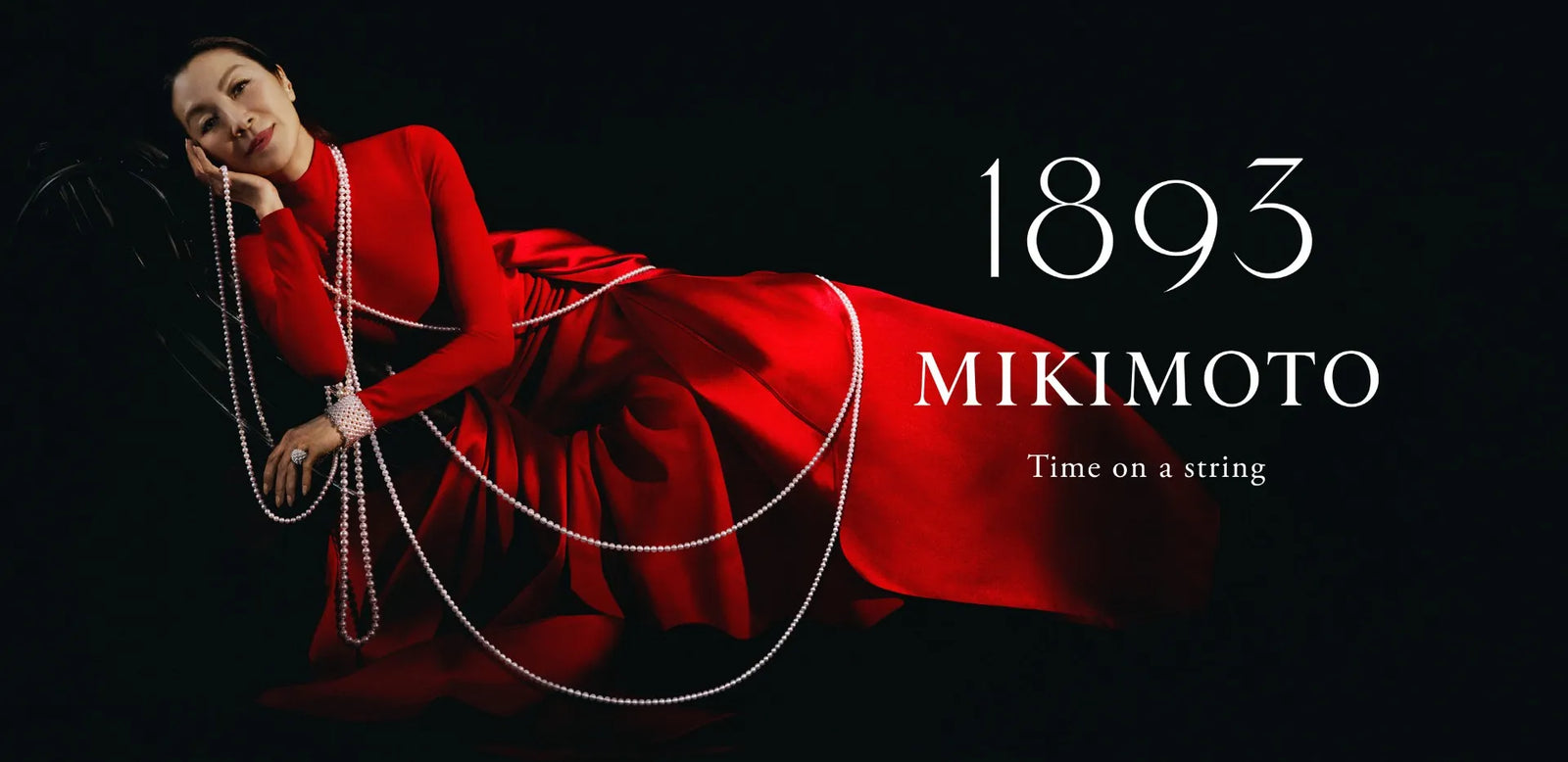

In 1893, Kokichi Mikimoto coaxed an oyster into producing a cultured pearl, proving that human ingenuity and nature could collaborate to create something extraordinary. More than 130 years later, Mikimoto pearls remain the global standard for cultured pearl quality, and the name carries a weight that few jewellery houses can match. If you are considering Mikimoto, whether a first pair of Akoya studs or a serious South Sea strand, here is what you need to understand before you invest.

Many companies sell cultured pearls. What separates Mikimoto is ruthless selectivity. On average, fewer than ten percent of the pearls harvested for Mikimoto pass their internal quality standards. The rest are rejected entirely. This practice traces back to the founder’s own dramatic conviction: in 1932, Kokichi Mikimoto publicly burned thousands of substandard pearls to make a point about quality that the company still enforces today.
Mikimoto also uses a proprietary grading system rather than the industry-standard A to AAA scale. Their grades, spanning A, A+, AA, and AAA, evaluate five criteria: lustre, surface quality, shape, colour, and nacre thickness. Because this system was built specifically for the nuances of Akoya pearl quality, it captures subtle differences that a generic scale would miss.
Mikimoto works with three primary pearl types, and understanding the differences matters more than most buyers realize.
Akoya cultured pearls are Mikimoto’s foundation. Sized between 3 and 9 mm, they produce the sharpest, most reflective lustre of any pearl variety, a near-mirror surface that catches light from across a room. These are the pearls most people picture when they think of a classic strand or elegant studs.

Black South Sea cultured pearls, grown exclusively in French Polynesia, are dramatically different. Larger, typically 8 to 14 mm, with colours ranging from deep charcoal to iridescent peacock green, these are statement gems. No two share exactly the same overtone, which makes Mikimoto’s strand-matching process exceptionally painstaking.
White South Sea cultured pearls are the largest and often the most valuable in the collection. Sized from 10 mm upward, they glow with a warm, satiny lustre rather than a sharp mirror. These pearls are never chemically treated after harvest; their colour is entirely natural.
Pearls are organic gems, and they demand more thoughtful care than diamonds or gold. A few essential practices will keep Mikimoto pearls looking their best for generations.

Apply cosmetics, hairspray, and perfume before putting your pearls on. Acids and chemicals dull nacre over time. Wipe your pearls with a soft cloth after every wear to remove perspiration before it affects lustre. Store them separately from other jewellery, since pearls rank just 2.5 on the Mohs hardness scale and scratch easily against harder stones and metals. A soft pouch or fabric-lined compartment is essential.
Mikimoto strands are strung on fine silk thread that loosens with wear. Annual restringing prevents a sudden, costly break. And never use ultrasonic cleaners on pearls; they can damage the nacre irreparably.
If there is a single takeaway from this guide, it is this: lustre is everything. A pearl’s lustre, that deep, almost liquid glow that seems to come from within, is the single most important indicator of quality. Size, shape, and colour all matter, but a smaller pearl with exceptional lustre will always be more captivating than a larger pearl with a dull surface. When you examine Mikimoto pearls in person, this becomes immediately obvious.
That is also why buying through an authorized retailer matters. Seeing true lustre in a photograph is nearly impossible. You need to hold the pearl, tilt it under light, and watch how it responds.
BANDIERA JEWELLERS is proud to be an authorized Mikimoto retailer, with a curated selection of Akoya, South Sea, and Black South Sea pieces available at our Vaughan and Yorkville boutiques. Whether you are drawn to a timeless strand or something more contemporary from the Cherry Blossom or Pearls in Motion collections, our team can walk you through every detail in person. Explore Bandiera’s Mikimoto collection at bandierajewellers.com/collections/mikimoto or visit us for a personal consultation.
Comments will be approved before showing up.