
A chronograph is far more than a beautiful instrument on the wrist—it's a mechanical storyteller, born from humanity's need to measure precision moments. Whether timing a pilot's descent, a racer's lap, or simply the seconds between heartbeats, the chronograph has earned its place as one of horology's most significant complications.

The chronograph's credibility was forged in the most demanding environments on Earth—and beyond. During the space race, chronographs accompanied astronauts on their missions, proving their durability and accuracy in conditions no earthbound test could fully replicate. In motorsport, drivers depend on chronographs to measure lap times and race segments with split-second accuracy. The precision demanded by professional racing pushed chronograph manufacturers to refine their craft continuously.

Let's explore four truly iconic chronographs that have shaped watchmaking history and defined what it means to master the art of time. Each of these chronographs represents a different facet of mechanical mastery: navigation, exploration, innovation, and style. Together, they remind us why the chronograph endures—because some things demand to be measured with precision, and some tools demand to be worn with pride.
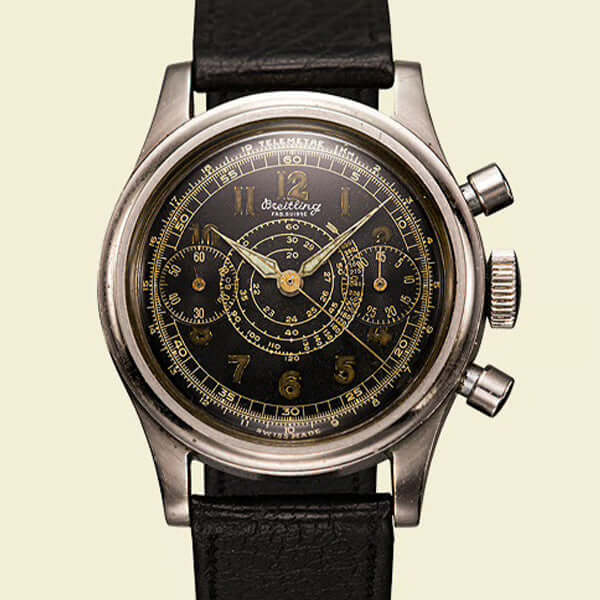
Short for Navigation-Timer, the Breitling Navitimer emerged in the 1950s as the ultimate pilot's companion. This watch didn't just tell time—it calculated flight paths, fuel consumption, and distance with its integrated slide rule bezel. The Navitimer became so indispensable that the Aircraft Owners and Pilots Association (AOPA) officially recognized it as the association's official wristwatch. Decades later, it remains a symbol of aviation excellence and the kind of precision instrument that transforms a tool into an icon.

Some watches mark moments in history. The Omega Speedmaster Professional made history. In July 1969, it became the first watch worn on the lunar surface during the Apollo 11 mission. Astronauts trusted it in the harshest environment humanity had ever ventured into—and it performed flawlessly.
 That single mission elevated the Speedmaster from a respected racing chronograph into a legend, and it remains the only watch qualified by NASA for extravehicular activity to this day.

In 1969, Zenith achieved what many thought impossible: the first fully integrated automatic chronograph movement.

The El Primero beat at 36,000 vibrations per hour—nearly double the standard—giving it a one-tenth-second resolution that was revolutionary. Born during the quartz crisis when mechanical watches were questioned, the El Primero proved that innovation and tradition could coexist. It remains a masterclass in Swiss engineering and horological ambition.

Steve McQueen wore it. Le Mans immortalized it. The TAG Heuer Monaco reference 1133B, with its distinctive square case and Gulf Racing livery, became inseparable from the King of Cool during the legendary 1971 film.

That association transformed the Monaco from a racing watch into a cultural icon—proof that a chronograph's true power lies not just in what it measures, but in the moments and personalities it becomes part of.


Comments will be approved before showing up.